Buy roadcycling.eu ?
We are moving the project
roadcycling.eu .
Are you interested in purchasing the domain
roadcycling.eu ?
domain@kv-gmbh.de · 0541-91531010
Buy roadcycling.eu ?
What speed in km/h per gear?
The speed in km/h per gear can vary depending on the vehicle's make and model. However, as a general guideline, in most manual transmission cars, the speed in km/h per gear typically increases as you shift up. For example, in first gear, you might reach speeds up to 30 km/h, while in second gear, you could go up to 60 km/h, and so on. It's important to consult your vehicle's manual for specific information on the speed range for each gear. **
In curves, which gear and at what speed (in km/h)?
In curves, it is generally recommended to downshift to a lower gear to maintain control and stability. The appropriate gear and speed will depend on the specific curve and the vehicle being driven. As a general guideline, when approaching a curve, it is advisable to downshift to a lower gear (such as second or third gear) and reduce speed to a safe and manageable level, typically between 20-40 km/h, depending on the sharpness of the curve. It is important to adjust speed and gear selection based on road conditions, visibility, and the handling capabilities of the vehicle. **

Similar search terms for Dreo-36-in-H
Top-Angebote
Products related to Dreo-36-in-H:
-
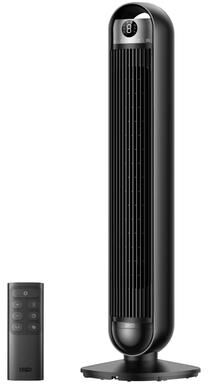
DREO 36 in. Tower Fan, 90° oscillation with Remote in Black"Enjoy powerful, whisper-quiet cooling with the Dreo 36"" Tower Fan. Equipped with a DC brushless motor and optimized airflow design, it operates as low as 25dB—perfect for peaceful nights."87,99 $*Shipping: 0,00 $Secure redirect to the provider




-
Does one multiply km/h by 36 to get m/s?
No, one does not multiply km/h by 36 to get m/s. To convert km/h to m/s, you need to divide the value in km/h by 3.6. This is because 1 km/h is equal to 0.27778 m/s. So, to convert km/h to m/s, you need to divide by 3.6, not multiply by 36. **
-
Why am I not reaching Adventure Rank 36 in Genshin Impact?
There could be several reasons why you are not reaching Adventure Rank 36 in Genshin Impact. It may be because you have not completed enough quests, explored enough of the map, or defeated enough enemies to earn the necessary experience points. Additionally, focusing on leveling up your characters and weapons, completing daily commissions, and participating in events can help you progress faster in the game. Make sure to also check your Adventurer's Handbook for tasks that can help you earn more experience points. **
-
What is the second gear at a speed of 200 km/h?
The second gear at a speed of 200 km/h would not be applicable in most vehicles. Second gear is typically used at lower speeds, such as during acceleration from a stop or at speeds up to around 40-50 km/h. At 200 km/h, a vehicle would likely be in a higher gear, such as fifth or sixth gear, depending on the specific transmission and gear ratios. **
-
How do you calculate speed in km/h?
To calculate speed in km/h, you need to divide the distance traveled in kilometers by the time taken to travel that distance in hours. The formula for calculating speed is: Speed (km/h) = Distance (km) / Time (h). For example, if a car travels 100 kilometers in 2 hours, the speed would be calculated as 100 km / 2 h = 50 km/h. This formula allows you to determine how fast an object is moving in kilometers per hour. **


At what speed does the car stall when turning at 20 km/h in second gear?
The speed at which the car stalls when turning at 20 km/h in second gear depends on various factors such as the specific car model, engine power, and road conditions. However, in general, a car is more likely to stall at lower speeds in second gear compared to higher gears. It is important to note that stalling can also occur due to improper clutch control, insufficient throttle input, or mechanical issues. Therefore, it is recommended to practice smooth and controlled acceleration and deceleration when turning at low speeds in second gear to avoid stalling. **
How many km/h can you drive in each gear?
The maximum speed you can drive in each gear varies depending on the vehicle and its transmission. In general, first gear is typically used for speeds up to around 30 km/h, second gear for speeds up to around 50 km/h, third gear for speeds up to around 70 km/h, fourth gear for speeds up to around 100 km/h, and fifth gear for speeds above 100 km/h. It is important to refer to the specific vehicle's manual for the recommended speed range for each gear. **
Top-Angebote
Products related to Dreo-36-in-H:
-
Dreo 36 in. H 6 speed Oscillating Digital Tower Fan With Remote Remote ControlThe Dreo 36 in. tower fan offers ultra-quiet (25dB) and versatile operation delivering up to 26ft/s winds, while featuring 4 modes, 6 speeds, 90 degree oscillation and a timer for a fully customizable comfort experience.115,99 $*Shipping: 0,00 $Secure redirect to the provider
-
Dreo 36 in. Smart Tower Fan, 8 Speed, DC Motor, 25 DB Quiet, 90° Oscillating with Remote and Wi-Dreo Fi Voice Control in BlackThe DREO 36-inch tower fan features Turbo Silent technology for ultra-quiet operation (25dB) and a powerful airflow (27ft/s). Control it remotely via the DREO App or with Alexa/Google Assistant.96,49 $*Shipping: 0,00 $Secure redirect to the provider
-
DREO 36 in. Tower Fan, 90° oscillation with Remote in Black"Enjoy powerful, whisper-quiet cooling with the Dreo 36"" Tower Fan. Equipped with a DC brushless motor and optimized airflow design, it operates as low as 25dB—perfect for peaceful nights."87,99 $*Shipping: 0,00 $Secure redirect to the provider
-
What speed in km/h per gear?
The speed in km/h per gear can vary depending on the vehicle's make and model. However, as a general guideline, in most manual transmission cars, the speed in km/h per gear typically increases as you shift up. For example, in first gear, you might reach speeds up to 30 km/h, while in second gear, you could go up to 60 km/h, and so on. It's important to consult your vehicle's manual for specific information on the speed range for each gear. **
-
In curves, which gear and at what speed (in km/h)?
In curves, it is generally recommended to downshift to a lower gear to maintain control and stability. The appropriate gear and speed will depend on the specific curve and the vehicle being driven. As a general guideline, when approaching a curve, it is advisable to downshift to a lower gear (such as second or third gear) and reduce speed to a safe and manageable level, typically between 20-40 km/h, depending on the sharpness of the curve. It is important to adjust speed and gear selection based on road conditions, visibility, and the handling capabilities of the vehicle. **
-
Does one multiply km/h by 36 to get m/s?
No, one does not multiply km/h by 36 to get m/s. To convert km/h to m/s, you need to divide the value in km/h by 3.6. This is because 1 km/h is equal to 0.27778 m/s. So, to convert km/h to m/s, you need to divide by 3.6, not multiply by 36. **
-
Why am I not reaching Adventure Rank 36 in Genshin Impact?
There could be several reasons why you are not reaching Adventure Rank 36 in Genshin Impact. It may be because you have not completed enough quests, explored enough of the map, or defeated enough enemies to earn the necessary experience points. Additionally, focusing on leveling up your characters and weapons, completing daily commissions, and participating in events can help you progress faster in the game. Make sure to also check your Adventurer's Handbook for tasks that can help you earn more experience points. **
Similar search terms for Dreo-36-in-H
-
DREO Countertop Water Filter 115, 5L Tank, 7-in-1 Reverse, Osmmosis Filtration SystemThe DREO Countertop RO Water Filter 115 makes water purification effortlessly for everyday life. Its cost-effective 7-in-1 RO filter ensures purified water delivery, while real-time TDS sensing lets you see water quality at a glance.199,99 $*Shipping: 0,00 $Secure redirect to the provider
-
What is the second gear at a speed of 200 km/h?
The second gear at a speed of 200 km/h would not be applicable in most vehicles. Second gear is typically used at lower speeds, such as during acceleration from a stop or at speeds up to around 40-50 km/h. At 200 km/h, a vehicle would likely be in a higher gear, such as fifth or sixth gear, depending on the specific transmission and gear ratios. **
-
How do you calculate speed in km/h?
To calculate speed in km/h, you need to divide the distance traveled in kilometers by the time taken to travel that distance in hours. The formula for calculating speed is: Speed (km/h) = Distance (km) / Time (h). For example, if a car travels 100 kilometers in 2 hours, the speed would be calculated as 100 km / 2 h = 50 km/h. This formula allows you to determine how fast an object is moving in kilometers per hour. **
-
At what speed does the car stall when turning at 20 km/h in second gear?
The speed at which the car stalls when turning at 20 km/h in second gear depends on various factors such as the specific car model, engine power, and road conditions. However, in general, a car is more likely to stall at lower speeds in second gear compared to higher gears. It is important to note that stalling can also occur due to improper clutch control, insufficient throttle input, or mechanical issues. Therefore, it is recommended to practice smooth and controlled acceleration and deceleration when turning at low speeds in second gear to avoid stalling. **
-
How many km/h can you drive in each gear?
The maximum speed you can drive in each gear varies depending on the vehicle and its transmission. In general, first gear is typically used for speeds up to around 30 km/h, second gear for speeds up to around 50 km/h, third gear for speeds up to around 70 km/h, fourth gear for speeds up to around 100 km/h, and fifth gear for speeds above 100 km/h. It is important to refer to the specific vehicle's manual for the recommended speed range for each gear. **
* All prices are inclusive of VAT and, if applicable, plus shipping costs. The offer information is based on the details provided by the respective shop and is updated through automated processes. Real-time updates do not occur, so deviations can occur in individual cases. ** Note: Parts of this content were created by AI.